Guide to wearing aligners
Braces are often considered an inconvenient, but necessary, rite of passage for children and young teens as they seek to correct crooked teeth and bite issues that may negatively impact oral health later on. While braces are common in childhood, the American Association of Orthodontists states one out of every five orthodontic patients is over the age of 18. It's common for teens and adults alike to experience some apprehension about the idea of wearing braces. Often, they're worried about how braces will look, feel or impact their daily life.
In recent years, an alternative to traditional metal braces has taken the dental world by storm. The benefits of clear aligners are both cosmetic and functional. A clear aligner is harder to see, easier to maintain and a healthy way to correct minor dental problems without undergoing intense orthodontic treatment. What exactly are clear aligners? And what makes them a good option for you?
What Are Clear Aligners?
Aligners are clear trays typically crafted from plastic or acrylic material. With customized models and photographs of your teeth, aligners are crafted to fit snugly around teeth to achieve the same results as braces — straight teeth and beautiful smiles. Aligners are designed to gently apply pressure that gradually shifts teeth into place inside of your mouth.
Typically, the process begins with a qualified dentist or orthodontist taking X-rays and impressions of your teeth. Those images are then combined to design aligners that fit to your teeth and will help achieve the desired results. There are many reasons to choose clear aligners. This alternative to traditional braces has become increasingly popular due to the following benefits:

1. They're Removable
Unlike braces or retainers, aligners are designed to be replaced every two weeks. When your treatment begins, you'll receive a series of trays specifically ordered and labeled for the top and bottom parts of your mouth. After one week to two weeks of continuous wear, you'll swap out the previous aligner with a new one.
This method of swapping out trays is designed to gradually shift crooked teeth into place by applying pressure in the right areas of the mouth. It takes a series of aligners to accommodate this shift in spacing because every couple of weeks your teeth will have moved slightly.
2. They're Clear
Aligners are designed to be discreet, which is one of the reasons many adults prefer them to traditional metal braces. Aligner trays are clear, so once they're in place, it's almost impossible for other people to notice you're wearing them. As long as you keep them clean, aligners stay clear, so you can feel confident wearing them.
3. They're Easy to Maintain
Aligner care is similar to that of a traditional retainer. Aligners are designed to be worn day and night. However, it's important to remove them when eating, drinking anything besides water and brushing your teeth. It's also important to remove them once a day to clean them. This helps avoid trapping bacteria and food particles against your teeth.
4. They're Less Painful
If you've known anyone who wears braces, you may be aware that regular adjustments can be uncomfortable. There's also the discomfort associated with rubber bands and other "extras" that may be attached. Aligners take away the painful part of the process because they aren't cemented to your teeth and the adjustments that come when you switch to a new tray are more gradual. Some patients report occasional discomfort after switching to a new tray, but this discomfort is usually minimal and tends to end quickly.
5. They're Less Restrictive
With traditional braces, there are a lot of restrictions about what foods you can and can't eat. Since aligners come out when you eat, they don't place any limitations on your diet. You can eat apples, popcorn or caramel — nothing is off-limits. Just be sure to brush thoroughly before putting your aligners back in place. Aligners are also easier to keep clean. Just pop the aligners out when it's time to brush your teeth and give them a quick scrub before you put them back in place.
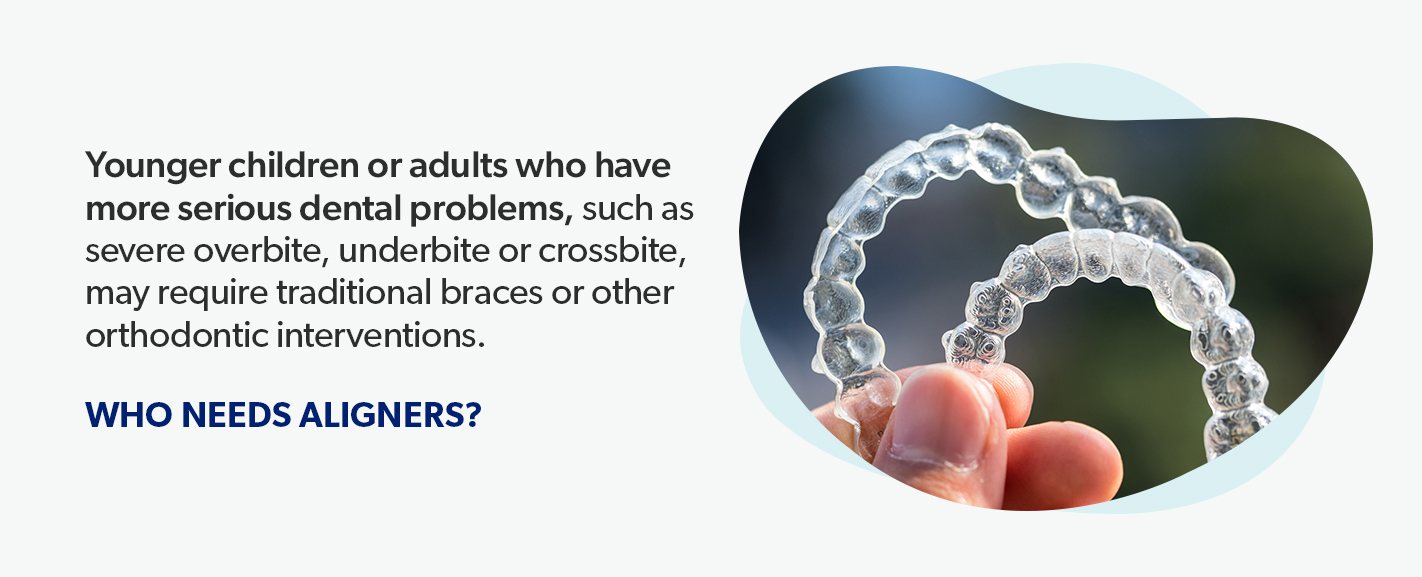
Who Needs Aligners?
Like metal braces, aligners can be used to correct minor spacing issues with teeth, overcrowding or minor over- and underbites. To work most effectively, they need to fit snugly around teeth, which means teens and adults — whose teeth are already in place — are the best candidates for aligners. Younger children or adults who have more serious dental problems, such as severe overbite, underbite or crossbite, may require traditional braces or other orthodontic interventions.
Although there is a cosmetic benefit to opting for aligners, it's not all about appearance. Correcting the spacing of teeth protects long-term oral health and well-being. Why? If your teeth are crowded, it may be difficult to properly brush and floss, putting you at risk for decay and gum disease. Misaligned teeth and jaws can lead to problems with swallowing and chewing, jaw pain and difficulty forming certain sounds when you talk.
If you're wondering if you should get aligners, it's important to talk with a qualified dentist or orthodontist. They can examine your teeth and your oral history to determine whether aligners are right for you.
How to Get Aligners
Traditionally, if you wanted to correct your teeth, you'd schedule an appointment with an orthodontist as their specialty is correcting problems with teeth, bite and jaws. But aligners can be fitted and monitored by a dentist who has been trained to measure for aligners. Your aligner options include working with a professional or trying an at-home option:
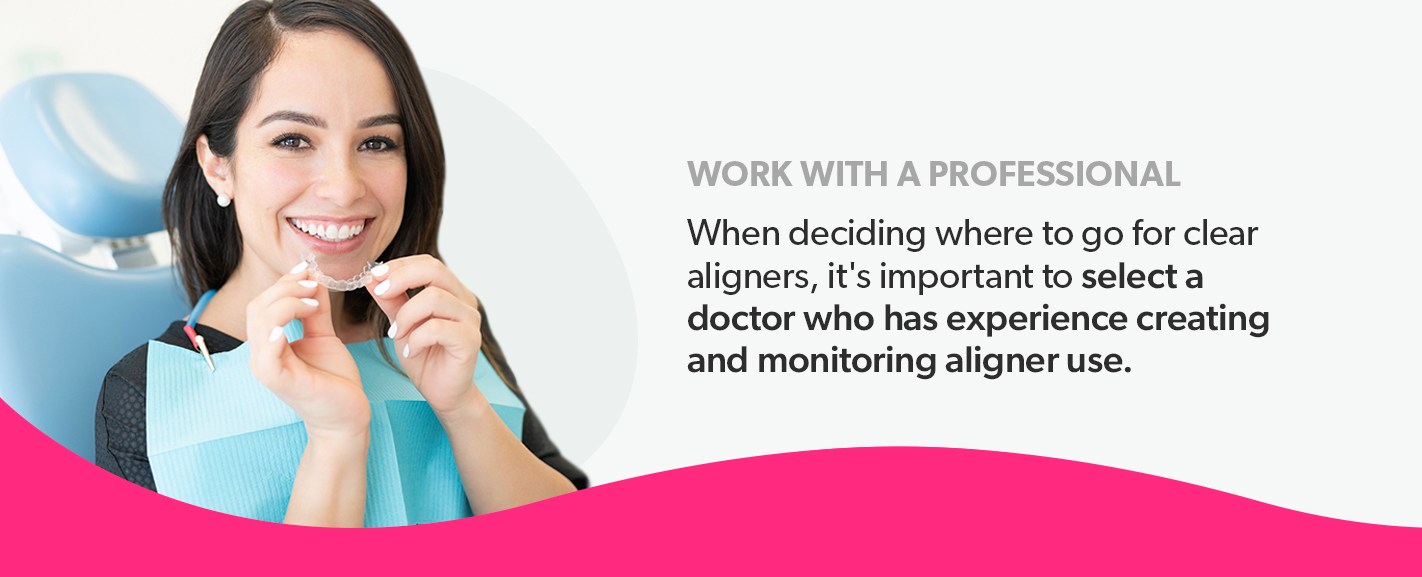
Work With a Professional
Aligners were created as a simple way for dentists to treat crooked teeth. For some people, the option to stick with their usual dentist is especially appealing. Many orthodontists also offer aligners as an alternative to their traditional treatments. The truth is you can have an effective and positive aligner experience with a dentist or an orthodontist. When deciding where to go for clear aligners, it's important to select a doctor who has experience creating and monitoring aligner use. In some cases, that may be a dentist.
As the construction and design behind aligners has improved, it's rare that any adjustments are needed. This means it's not always necessary to be under the care of an orthodontist to use aligners. In other cases, it may be wise to work with an orthodontist, especially if you need to be evaluated to determine whether or not you need more extensive orthodontic care.
Use an At-Home Kit
Another option that's gaining momentum is aligner at-home kits. When you order one of these kits, it sends you the materials to take impressions of your teeth to ship away to be formed into aligners. This option has risen in popularity because of its relatively low cost and the appeal of completing the process at home instead of spending money going to the dentist.
The downside to this method is that there isn't a professional dentist or orthodontist involved in your care to make adjustments or ensure you're getting the right fit from the beginning. This may not be a problem, but there's a lot to be said for having a professional nearby who knows your history and is available if you need help.

How Long Will Treatment Last?
Expect to be changing aligner trays every one week to two weeks until treatment is complete. Aligners should be worn at least 22 hours a day. Like braces, the length of treatment depends on the severity of the issues being corrected and the distance the teeth have to travel. Good oral hygiene and careful adherence to a care plan also determine how quickly you'll see results. Failure to follow the prescribed treatment plan or take care of the aligners may result in less-than-desired results or may increase the amount of time required to complete treatment.
During treatment, expect to meet with your dentist or orthodontist once every six weeks to eight weeks. During these periodic checkups, they can track the progress of your teeth, as well as discuss any questions or concerns that have come up since your last appointment. They can also address problems that arise, such as broken trays, tooth sensitivity or discomfort.
There isn't an average time required to wear aligners over the course of treatment. Some people find their treatment is completed in five months, and others find it takes a year or more. Your dentist or orthodontist can provide an estimate based on your individual needs and treatment plan. It's important to wear retainers after aligners full-time for six months and then at night after that. A retainer helps provide some support while your teeth adjust to life without the daily pressure of aligners and prevent them from slipping back into their old positions.

Making Sure Aligners Fit
One of the reasons aligners blend in so well against teeth is that they are crafted to fit your mouth. Once you receive your first set of aligners, expect to have periodic appointments with your doctor to confirm the aligners are tracking — a fancy word for "fit" — properly. How should aligners fit? Proper tracking means:
There aren't gaps between the edges of teeth and the trays.
The aligners don't move or rock when a patient talks, swallows or shifts their teeth.
Attachments are properly engaged.
Aligners fit well over the tops and sides of teeth.
Well-fitting aligners are important to your comfort and the overall effectiveness of the treatment plan that's been prescribed for you. If your aligners aren't tracking properly, it's important to identify the problem. That way, you can correct the issue before you move on to the next set so the problem doesn't continue throughout the course of treatment and interfere with your results.
In some cases, you may find that a new set of trays doesn't fit up against your teeth the way it should. When you receive your first set of aligners, your dentist or orthodontist will likely also give you "chewies" to take home with you. Chewies are bite sticks that are designed to help maneuver aligners into place. If you're having trouble getting your trays to line up and snugly cover your teeth, gently bite down on a chewie several times and it should slide securely around the teeth.
For improvement of overall fit, just place the chewie in between your front top and bottom teeth and bite down several times. If there's a specific problem area that needs some alignment, you can move the chewie toward that area so the pressure is directed toward the problem spot. Although it's important for aligners to fit snugly over teeth, that doesn't mean they're difficult to remove. There's no specific strategy for how to take out aligners when it's time to brush or eat. Gently pop them out, store them somewhere safe and put them back in when you're done.
Related posts
-
 How to tell if it's time to replace a retainer
Retainers play an essential role in your post-orthodontic treatment plan. They help keep your teeth straight,...
How to tell if it's time to replace a retainer
Retainers play an essential role in your post-orthodontic treatment plan. They help keep your teeth straight,...